GHK-Cu has become one of the more recognizable copper peptides in skin, tissue repair, and regenerative research. Yet its popularity can make science look more settled than it really is.
Researchers have documented interesting effects on fibroblasts, extracellular matrix activity, inflammation, and oxidative stress. Human evidence, however, remains far more limited than the laboratory evidence.
This guide explains what GHK-Cu is and where researchers are studying it. It also looks at the limits of current evidence and what laboratories should check when sourcing GHK-Cu for research.
So, let’s get started.
Quick Summary:
GHK-Cu is a naturally occurring copper-binding tripeptide studied for tissue remodeling, collagen production, wound repair, oxidative stress, skin structure, and hair follicle activity. Recent research supports several biological effects, including changes in fibroblast activity, collagen synthesis, and extracellular matrix remodeling, but much of the evidence remains preclinical, and researchers still need larger, standardized human trials.
What Is GHK-Cu Peptide?
GHK-Cu is a copper complex formed when the naturally occurring tripeptide glycyl-L-histidyl-L-lysine, or GHK, binds a copper ion. Researchers study the complex because both copper transport and GHK-associated signaling appear to influence tissue repair and extracellular matrix activity. Let’s take a look at its brief history and natural occurrence in the body.
A Brief History

GHK was first isolated from human plasma in 1973 during research led by Loren Pickart. Later work established its strong affinity for copper and characterized the GHK-Cu complex. Later, the research showed that GHK readily forms a complex with copper, leading researchers to explore GHK-Cu in tissue remodeling, wound repair, skin biology, and related fields.
Since then, research has moved from basic biochemical characterization into cell studies, animal models, cosmetic formulations, delivery technologies, and a limited number of human trials.
Where GHK-Cu Occurs Naturally in the Body
GHK occurs naturally in human plasma and has also been identified in fluids such as saliva and urine. The peptide can bind copper present in biological systems and form GHK-Cu.
Researchers have also reported that circulating
GHK concentrations fall with age
. That observation has helped drive interest in its possible connection with tissue repair and age-related changes in extracellular matrix activity.
How to Use GHK-Cu peptide for Research Purposes?
GHK-Cu peptide is primarily researched for its role in skin regeneration, tissue repair, and modulating gene expression related to anti-aging. Below is a closer look at key areas of research:
Skin and Tissue Remodeling Research
Fibroblasts do a lot of the work behind connective tissue structure. They produce collagen and other extracellular matrix components, so changes in fibroblast activity can affect how tissue forms and remodels.
Researchers have tested
GHK-Cu for its influence on fibroblast behavior
, collagen production, and matrix turnover. That work forms much of the biological foundation behind its use in skin-related research.
Wound Healing and Tissue Repair Research
GHK-Cu also appears in research examining cell migration, angiogenesis, matrix formation, and wound closure. A
2025 review of tripeptides
in wound research discussed GHK-Cu in connection with fibroblast proliferation, collagen synthesis, angiogenesis, and extracellular matrix remodeling.
Researchers are also testing new ways to deliver peptides into experimental wound environments, including hydrogels and other biomaterials.
Research on Collagen, Elastin, and Skin Structure
Researchers are also investigating GHK-Cu for possible effects on collagen and other structural proteins. Tissue requires a controlled cycle of synthesis, breakdown, and reorganization.
So, the
studies have looked at collagen production
along with enzymes involved in extracellular matrix turnover and other structural components.
This gives researchers a fuller picture of how GHK-Cu might affect tissue architecture.
Hair Follicle and Hair Growth Research
Copper peptides have been investigated in
hair-follicle research,
but evidence for GHK-Cu itself should not be confused with findings from other copper-binding peptides. Research involving related compounds can help generate hypotheses, but it does not establish the same effect for GHK-Cu.
At present, the science supports continued investigation more strongly than it does broad claims about hair-growth outcomes.
Cellular Protection and Oxidative Stress Research
Cells constantly produce reactive oxygen species as part of normal biological activity. However, problems can develop when their production exceeds the cell's ability to control them.
So researchers also examine GHK-Cu in models of oxidative injury and inflammatory signaling. Such experiments can uncover mechanisms worth further study without proving a clinical benefit on their own.
What Are the Possible Benefits of GHK-Cu Peptide Being Studied?
Research on GHK-Cu spans cell studies, animal models, and a much smaller body of human research. These evidence types should not be treated as equivalent. Findings from laboratory models can identify biological effects worth studying, but they do not establish the same outcomes in people.
Some peptides are supported by cell and animal models, while a smaller number have entered controlled human studies. So, instead of exactly saying the "benefits," researchers should consider the current findings as areas under investigation, not a guaranteed biological outcome.
Here are some
notable areas researchers are currently investigating
:
- Collagen and elastin support , tied to the fibroblast stimulation described in the mechanism section above.
- Skin barrier repair and wound healing , based on the wound chamber and in vivo animal data.
- Antioxidant protection against free radicals , through upregulation of enzymes like superoxide dismutase.
- Fine lines, firmness, and skin density , studied in a small number of placebo-controlled human trials involving topical application.
- Hyperpigmentation and skin tone , an emerging area with far less published data than the collagen and wound healing research.
- Hair follicle research remains less established for GHK-Cu, and findings from related copper peptides should not be treated as direct evidence for GHK-Cu.
What Does the Research Say About GHK-Cu?
GHK-Cu has been studied for decades, but the volume of research can create a misleading impression of how much high-quality human evidence is available. Current evidence gives GHK-Cu a plausible biological basis for further research, especially in extracellular matrix remodeling and regenerative biology.
However, the overall evidence base for GHK-Cu is unusually large for a peptide of this size, but it is also uneven, with far more depth in some areas than others. This disparity stems from a large gap between extensive laboratory evidence and limited standardized human trials.
Laboratory and Preclinical Evidence
Much of the published evidence comes from cell and animal studies. The
1988 fibroblast study
and the
1993 rat wound chamber study
remain two of the most cited papers in this literature. Besides that, more recent work, including the
2026 colitis study
, continues to add mechanistic detail using tools like network pharmacology and molecular docking.
Across preclinical studies, researchers have reported effects involving extracellular matrix synthesis and metalloproteinase activity. Other experiments have examined angiogenesis, inflammation, and cellular proliferation.
Human Research on GHK-Cu
While animal and cell culture studies dominate the literature, several human trials also offer valuable translational data.
Only two of the 20 studies included in the above 2026 systematic review were randomized controlled trials. Based on these studies, researchers reported outcomes involving wrinkle measurements and patient satisfaction after laser resurfacing.
The review authors also pointed to the need for larger controlled trials with standardized formulations and delivery methods. This is an important qualification because formulation differences can change how much peptide reaches its intended target.
Current Evidence Gaps and Research Limitations
GHK-Cu is relatively hydrophilic, which can limit its movement through the skin's lipophilic outer barrier. A
2025 paper examining GHK-Cu permeation
noted limited transport through the stratum corneum and highlighted the lack of research on delivery systems such as GHK-Cu-loaded liposomes.
Researchers also face differences in concentrations, formulations, experimental models, endpoints, and study duration. Those variations make direct study-to-study comparisons difficult.
How to Get GHK-Cu Peptide: Factors Researchers Should Look for
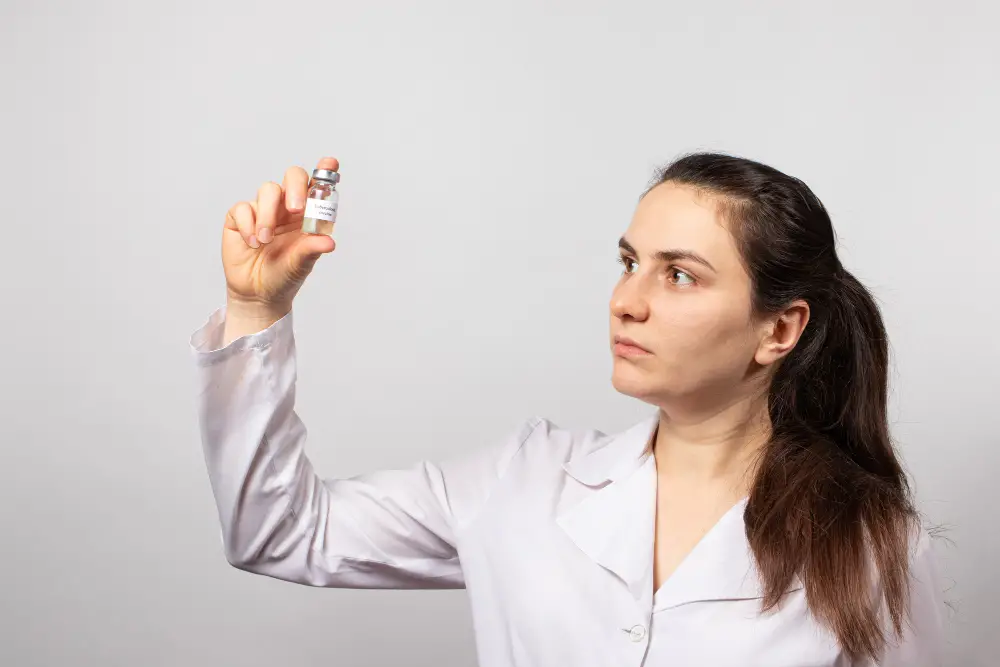
Even a carefully designed experiment can run into trouble when the starting material is poorly characterized. Before making conclusions based on the results, researchers should verify that the compound in the vial is the one that is claimed to be present and pure.
Here is what laboratories should consider when evaluating GHK-Cu for research:
Verified Purity and Compound Identity
Researchers should confirm both the purity and chemical identity. Purity testing measures the amount of the tested sample that is the target compound relative to detectable impurities. Identity testing, by contrast, determines whether researchers have indeed obtained the expected molecule.
Third-Party HPLC and Mass Spectrometry Testing
HPLC and mass spectrometry can provide different types of analytical information about a peptide sample. HPLC can help assess chromatographic purity, while mass spectrometry can help confirm molecular identity. HPLC helps laboratories separate components and evaluate purity, while mass spectrometry provides information that helps confirm molecular identity.
That’s the reason GMR Peptides uses independent HPLC and mass spectrometry testing for its
GHK-Cu research peptide
. Researchers can review the corresponding analytical information before selecting material for controlled laboratory work.
Batch-Specific Certificates of Analysis (COAs)
Researchers should also look for the lot number, analytical method, reported result, test date, and testing laboratory. That is only possible when there is a detailed COA (certificate of analysis).
Every batch should come with its own Certificate of Analysis rather than a generic document applied across an entire product line. Batch-specific documentation matters because peptide synthesis can vary slightly from one production run to the next, and a lab needs to know exactly what was tested and confirmed for the specific vial in front of them.
Note: GMR also provides its broader
with batch documentation and a stated 99%+ purity standard.
Proper Packaging, Storage, and Traceability
Peptide stability depends on the compound, formulation, and storage conditions. Researchers should follow the storage information supplied for the specific material and document conditions that could affect sample integrity.
- Temperature
- Moisture
- Light exposure
- Repeated handling
- Preparation conditions
Therefore, you should look for suppliers who ship with tracking, use secure and discreet packaging, and can trace a given order back to its specific batch number and COA.
In a Nutshell
GHK-Cu has a substantial preclinical research history, but controlled human evidence remains limited. Researchers evaluating GHK-Cu should consider both the strength of the published evidence and the analytical documentation for the material used in their experiments.
If you are planning to purchase these peptides for research purposes,
GMR Peptides
is here to help. We supply GHK-Cu research peptides with batch-specific third-party HPLC and mass spectrometry testing and accessible COA documentation. Also, we follow a stated 99%+ purity standard. If you are interested in buying research-grade GHK-Cu,
place your order now
.
FAQs
Is GHK-Cu legal?
The regulatory status of GHK-Cu depends on how a product is formulated, labeled, marketed, and intended to be used. A research-use label does not by itself make human-use claims permissible. Researchers and suppliers should review the rules that apply to the specific product and intended use. It is not approved as a drug and cannot be marketed or sold to treat any medical condition.
Is GHK-Cu safe?
Topical GHK-Cu (copper peptide) is generally safe and well tolerated for cosmetic purposes, but injectable forms are associated with significant unverified risks and are not FDA-approved.
What is the difference between topical and injectable GHK-Cu?
Topical GHK-Cu is applied to the skin and has been studied mainly in cosmetic and skin-repair settings. Injectable GHK-Cu introduces different exposure and safety questions. The FDA has specifically identified potential immunogenicity concerns for compounded injectable GHK-Cu.
